
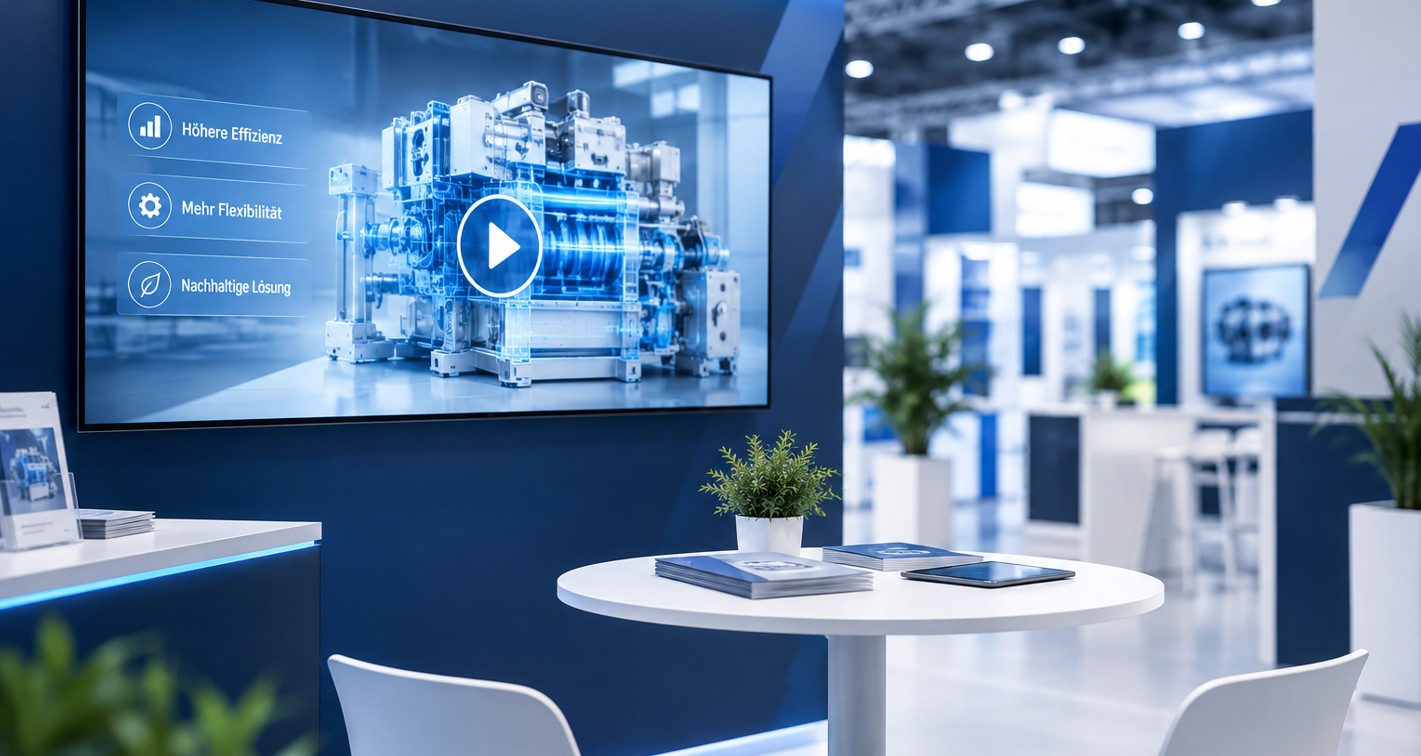
Trade Show Film for Complex Technology: Make Products Easier to Understand
A trade show gives you only a short time to explain what your product does and why it matters. That can be difficult when the technology involves several functions, hidden components or complex processes. Visitors may include engineers, buyers and decision-makers, each with different levels of technical knowledge.
A trade show film for complex technology can make these ideas easier to grasp. Animation can reveal internal processes, show a product from different angles and connect individual functions in a clear visual sequence. It can also help present products that are difficult to bring to a stand or are not yet available as physical models.
The goal is not to show every technical detail. It is to give visitors a clear understanding of the product and support the conversation that follows. The right approach depends on the product, the audience and the way people experience your stand.
Why moving images help explain technical products
A camera can show the outside of a product, but it cannot always capture what happens inside. A 3D animation can make internal components, movements and processes visible. It can also combine different views to help viewers understand how parts work together.
This is useful when a product is difficult to demonstrate in person or when its most important functions are not visible from the outside. Animation can also present technical systems, devices and processes—not only machinery.
Visitors at a trade show do not all have the same background. Some want detailed technical information; others need a straightforward introduction. A clear visual explanation can help both groups understand the product without oversimplifying its function.
How a trade show film supports your stand
A film should work in the environment where people will watch it. Visitors may see it from a distance, catch only part of it or watch without sound. Clear visuals and concise on-screen text can help communicate the main idea even in a busy exhibition hall.
The screen and format matter, too. A film for a large display may need a different pace and visual emphasis than a presentation on a tablet. If you plan to reuse the film for sales presentations or your website, consider those uses early so the content and formats can accommodate them.
A trade show film can attract attention, explain a function or support a product demonstration. It does not replace a conversation with your team. Instead, it can give visitors a useful starting point and help your colleagues answer more specific questions.
3D animation reveals perspectives that live-action footage may miss
Virtual camera movements can guide viewers through a product or process. Transparent views can reveal internal components, while animation can show how a function works over time. These techniques are most effective when they clarify the product rather than distract from it.
Gosetti’s trade show film project page describes virtual camera movements, transparent views and animated functions. The examples include a MAN battery-hybrid drive, a Curetis diagnostic system and an industrial coffee machine. The page presents these as project examples; it does not report quantified results such as increased sales or reduced exhibition costs.
Match the film to your wider presentation
A film is one part of the stand experience. Its visual style, pace and message should fit your product and company. Any effects should serve a clear purpose: highlighting a function, showing a process or directing attention to an important detail.
If you want to use the film after the event, plan for that as well. A film designed for a stand may also support sales presentations or online product communication, depending on its content and format.
What makes a technical trade show film effective?
An effective film combines visual clarity with technical accuracy. It presents the relevant information without overwhelming viewers, while preserving the details needed to represent the product correctly.
That requires collaboration. Technical specialists can verify how the product works. Marketing and sales teams can assess whether the message is relevant to the intended audience. The production team can then translate those requirements into a visual presentation.
CAD data, technical documents or product samples may provide useful source material, depending on the project. They do not replace the need to clarify which functions and processes the film should communicate.
Frequently asked questions
What products can a trade show film present?
A trade show film can present products or processes that benefit from visual explanation. Examples include machinery, technical devices, lighting products, diagnostic systems and other complex products. The key question is whether moving images help people understand how the product works.
Does a trade show film need sound?
Not necessarily. Visitors may watch in a noisy exhibition hall or with the sound turned off. The central message should therefore be understandable through the visuals and, where useful, concise on-screen text. Voice-over can add context but should not carry the entire explanation.
Can the film be used after the trade show?
Potentially. A film may also support sales presentations, a company website or other communications, depending on its content and format. Discuss these uses during planning so they can be considered in the production.
Present complex technology with clarity
A well-planned trade show film combines technical information with visuals that visitors can follow quickly. It can reveal functions, show processes and support conversations at your stand. The right approach depends on what your audience needs to understand and how the film will be shown.
Explore Gosetti’s trade show film projects for examples from different product areas.
